Epoxy Flooring in Marion, Iowa, Ground and Tested First

Garage, basement and commercial floor coatings built on a ground slab, a written moisture test and a proposal that names every coat.

Marion Epoxy Flooring brings 20+ years of concrete coating experience to homes and businesses in Marion, Iowa, installing epoxy garage floors, basement floor coatings, polyaspartic and flake systems, metallic epoxy, polished concrete and commercial and industrial floors. Every job starts with a ground slab and a moisture test, not a sales pitch and a bucket of etching acid.

We work across Marion and Linn County on residential garages and basements, machine and motor shops, warehouses, restaurant kitchens and storefronts. The written proposal names the product line, the number of coats and the finished thickness, so you can check the floor you get against the floor you were quoted.

We write Marion, Iowa on every page and every quote for a reason: search for epoxy flooring in Marion alone and the results fill with Illinois, Ohio and Florida. If you are in Marion, Hiawatha, Cedar Rapids or the towns around them, this is the local crew you were looking for.

Get Your Free Quote

Fast response • No obligation

So we can reach you about your request.

So we can send you a confirmation after you submit this inquiry form.

  • 20+ Years on Concrete
  • Moisture Tested Before Pricing
  • Free Written Estimates

What we do

Our Services

Epoxy flooring and concrete coatings for Marion, Iowa homes and businesses

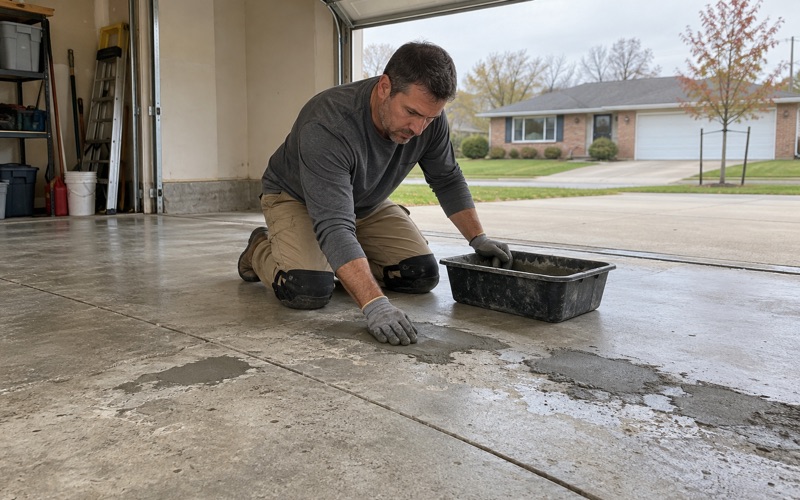
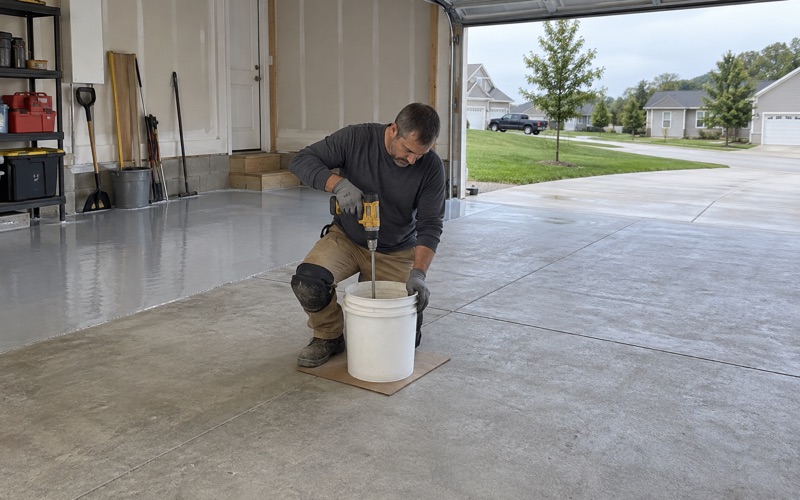
Two-part epoxy mixed in a pail on a ground garage slab in Marion, Iowa, the first coat already spread along the back wall.

Epoxy Garage Floor

Ground, moisture-tested epoxy garage floors for Marion, Iowa homes, built thick enough to shrug off road salt, hot tires and dropped tools.

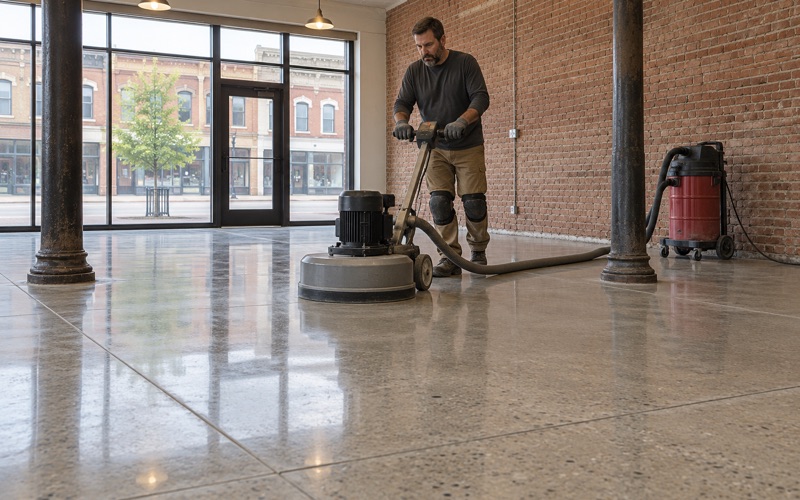
A planetary polisher bringing up the sheen on a concrete floor inside an old brick commercial building in Uptown Marion.

Polished Concrete Floors

Ground, densified and polished concrete floors for Marion, Iowa businesses and homes, with the aggregate exposure and sheen agreed before we start.

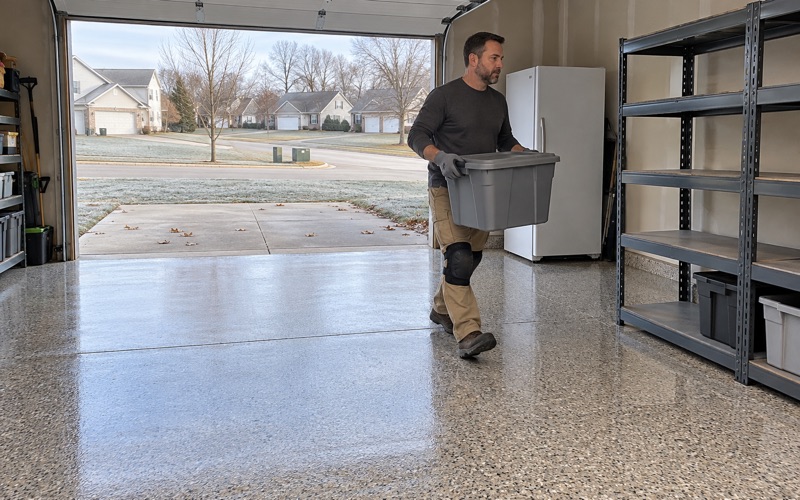
A storage tote carried back onto a same-day polyaspartic flake floor in a Marion garage on a cold November afternoon.

Polyaspartic Floor Coating

Fast-curing polyaspartic floor coatings for Marion, Iowa garages and businesses, with every layer and the finished thickness named in the proposal.

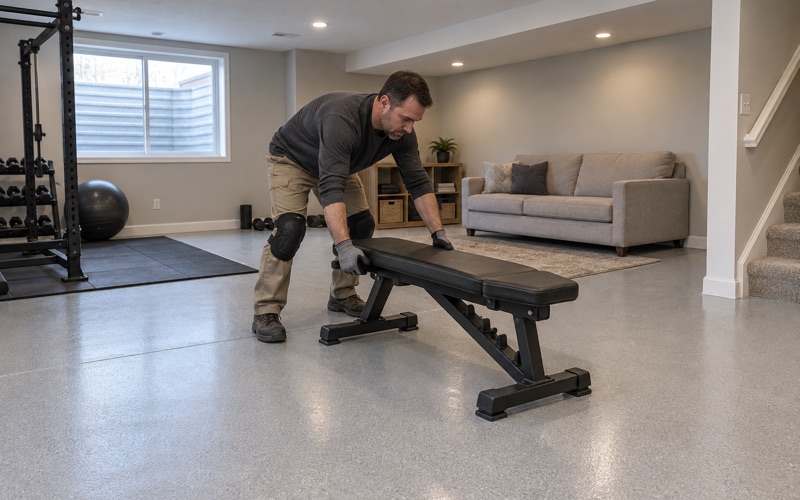
A workout bench slid onto a new light gray quartz epoxy floor in the finished basement of a Marion house.

Basement Floor Epoxy

Moisture-tested basement floor epoxy for Marion, Iowa homes, with the sump pit, drains and any past water read before a coating is recommended.

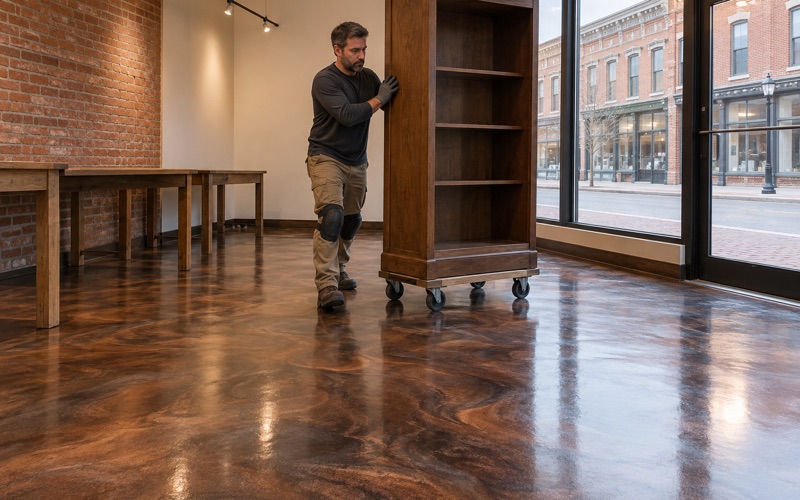
A display cabinet wheeled onto a bronze and charcoal metallic epoxy floor in a small Uptown Marion boutique.

Metallic Epoxy Floor

Marbled metallic epoxy floors for Marion, Iowa homes and businesses, poured on a flat, ground slab and sealed under a wear-resistant topcoat.

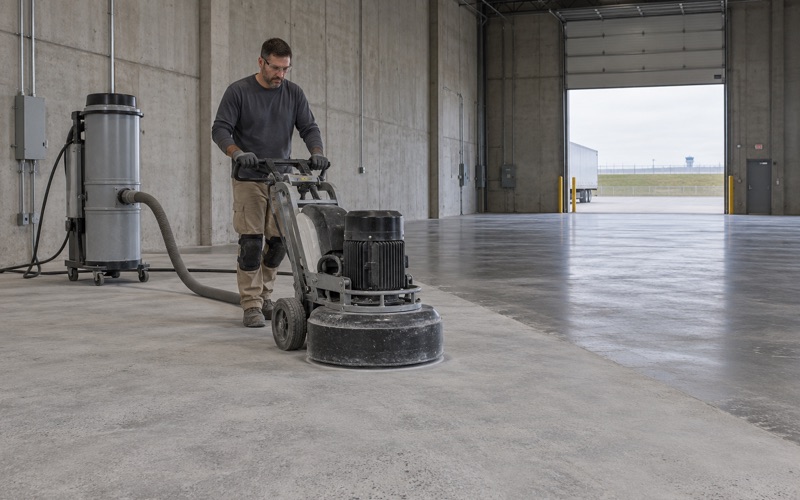
A planetary grinder with a dust shroud and extractor opening up a warehouse slab in the Marion Enterprise Center industrial park.

Concrete Grinding

Dust-controlled concrete grinding and shot blasting in Marion, Iowa that strips old coatings and glue and leaves a measured profile for the next floor.

Salt-damaged spalls at a Marion garage threshold patched with repair mortar before the floor is ground and coated.

Concrete Floor Repair

Crack, spall, joint and scaling repair for concrete floors in Marion, Iowa, with an honest call when a slab needs replacing instead of coating.

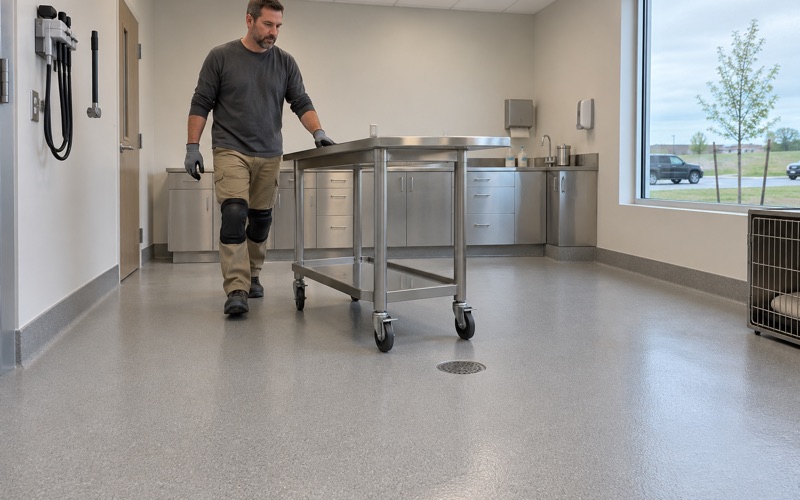
A stainless exam table rolled across a new coved epoxy floor in a Marion veterinary clinic treatment room.

Commercial Epoxy Flooring

Commercial epoxy floors for Marion, Iowa stores, offices, clinics, service bays and gyms, scheduled in phases around your business hours.

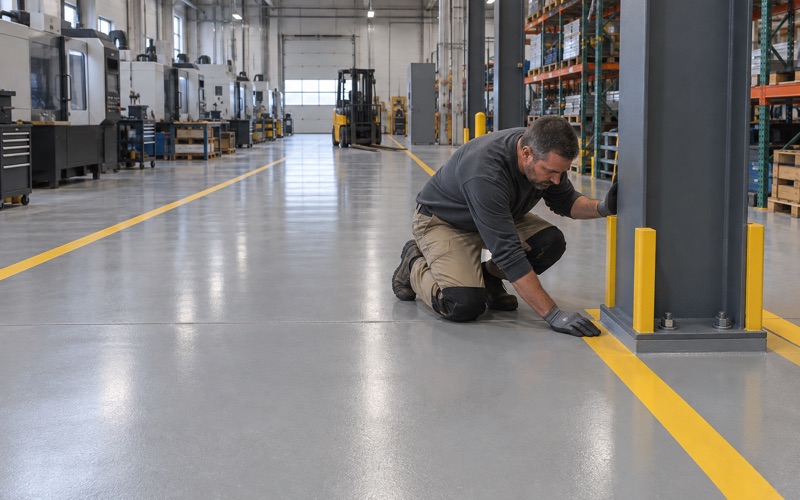
A worker checking the coating at a steel column base on a new high-build epoxy floor in a Marion manufacturing plant.

Industrial Epoxy Flooring

Heavy-duty epoxy and urethane cement floors for Marion, Iowa plants, machine shops, warehouses and ag service bays, installed around production.

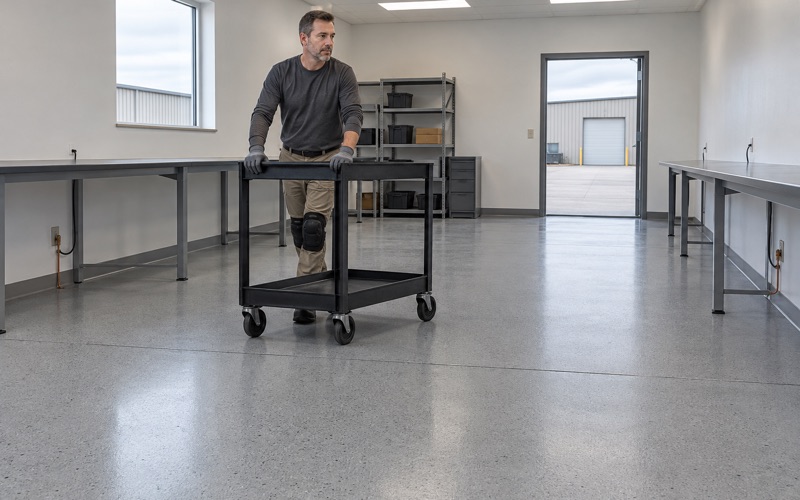
A conductive cart rolled across a finished static-dissipative epoxy floor in an electronics room in Marion, Iowa.

Esd Flooring

Static-dissipative and conductive epoxy floors for Marion, Iowa electronics, lab and data spaces, grounded and resistance tested before handover.

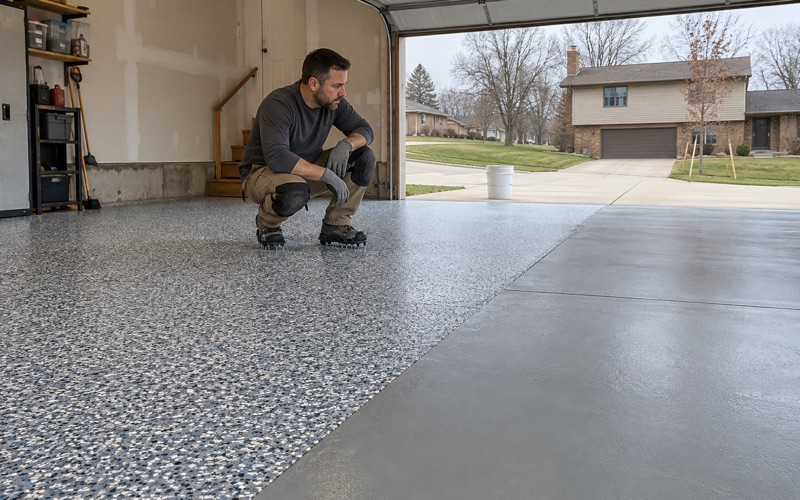
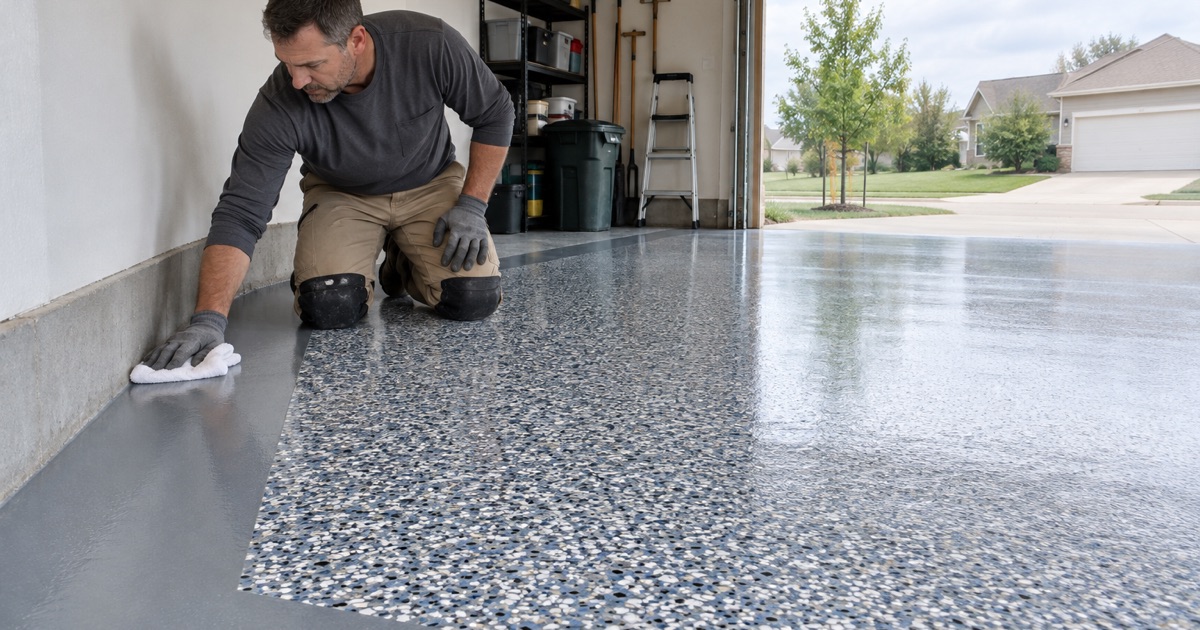
Dense gray, blue and white flake settled on the base coat in a Marion garage, the worker checking coverage at the working edge.

Flake Epoxy Floor

Full-broadcast vinyl flake epoxy floors for Marion, Iowa garages, basements and shops, with chip blend, size and texture matched to the space.

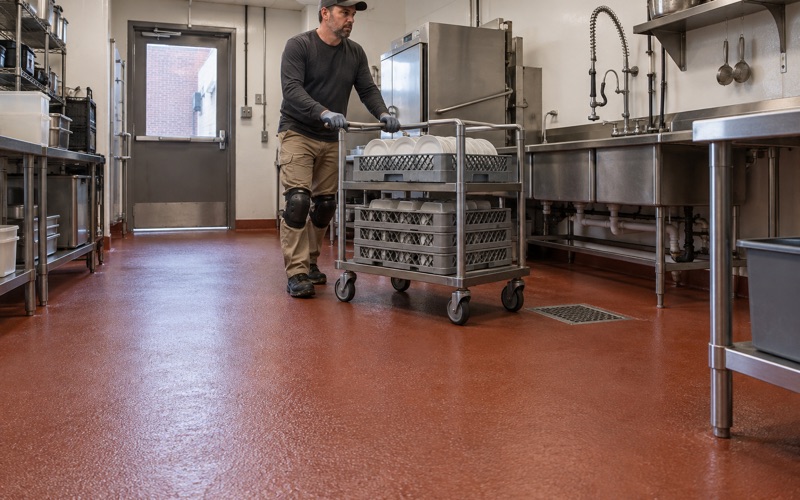
A dish cart pushed across a new urethane cement floor with a coved base and floor sink in an Uptown Marion restaurant kitchen.

Commercial Kitchen Flooring

Seamless urethane cement kitchen floors for Marion, Iowa restaurants and food businesses, with coved bases and texture planned for inspection.

Experience You Can Check

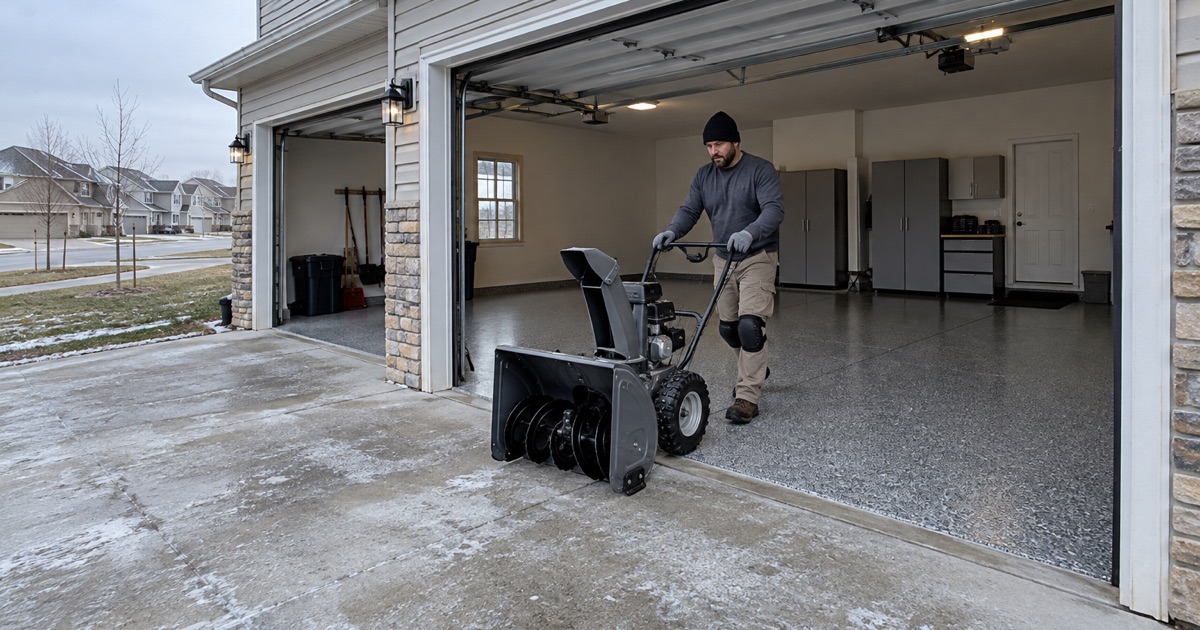
A snowblower wheeled back onto a new charcoal and gray flake floor in the three-car garage of a newer two-story house in Marion, Iowa.

20+ Years of Floor Coating Work

We have spent more than two decades preparing and coating concrete, and that time shows up in the steps most often skipped: grinding the slab properly, testing it for moisture, and telling an owner plainly when a floor should be repaired or replaced before anyone coats it.

Why Choose Marion Epoxy Flooring

Ground, Never Etched

Every slab we coat is opened with a diamond grinder or a shot blaster to a measured ICRI concrete surface profile, so the primer bonds into sound concrete rather than sitting on a weak, acid-washed skin the way a quick etch-and-roll job does.

Moisture Tested in Writing

No price is final until the slab has been tested for moisture and the result is written into the scope. Marion basements sit in the Indian Creek watershed, so we catch a damp slab before it lifts a coating rather than discovering it in a warranty call.

Built for Iowa Salt

Garage systems are chosen for the brine and rock salt that ride in on tires from November through March, with a sealed, thick build that keeps chlorides off the concrete so the slab does not scale and pit the way a thin hardware-store coat lets it.

Cure by the Slab, Not the Calendar

Our cure schedules follow slab temperature and dew point spread at the surface, and an unheated garage in a Linn County winter is told to wait, so amine blush and soft film never get trapped under a topcoat that was rushed onto a cold floor.

Honest About Limits

A floor coating is never sold as radon mitigation or basement waterproofing, and we put that in writing, because a coated floor that is promised to stop water or gas is a promise no coating keeps.

Dust Stays Out of the Drain

Grinding dust is captured at the machine with a vacuum rather than rinsed toward a floor drain, a sump pit or a storm inlet, so the slurry does not end up in a Marion sump line that empties to the storm sewer.

The Garage Floor, Start to Finish

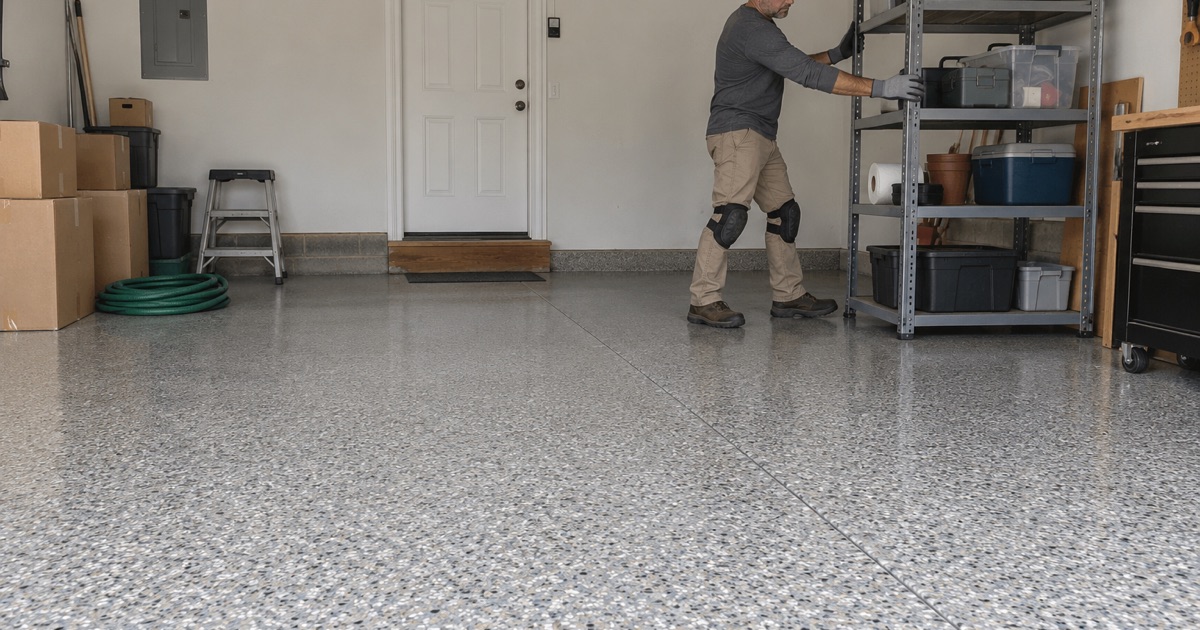
Steel shelving slid back onto a cured gray flake floor in a Marion ranch house garage, the last step after the coating is finished.

How an Epoxy Garage Floor Job Runs

A garage job starts with a walk of the slab, a moisture test and a crack map, then moves to grinding, repair, primer, broadcast and topcoat. We tell you on day one when you can walk on it and when you can park on it, so the schedule is not a guess.

Attached and Detached Garage Coatings

An attached garage shares air with the house, so we seal the door to the living space, capture grinding dust at the machine and offer low-odor products. A detached garage gives more freedom on product choice, but the same preparation and moisture testing apply to both.

Moisture Testing a Garage Slab

Garage slabs often sit on grade without the vapor retarder a basement gets, because IRC R506.2.3 lets a garage floor skip it. We test with a plastic sheet, a calcium chloride kit or relative humidity probes before coating, since moisture pushing up from below is a leading reason garage coatings blister.

Cracks, Spalls and Pitting in the Slab

We map every crack, spall and pitted patch before we price the job, then fill and grind them flush so they do not telegraph through the finish. When a slab is heaving, crumbling across large areas or badly out of level, we say it needs repair or replacement first.

Brine and Rock Salt on a Bare Slab

Calcium chloride and rock salt deicers dissolve into the meltwater that drips off a car and soak into bare concrete. Repeated freeze-thaw cycles then pop the surface into scaling and pitting, which a properly built coating keeps off the slab entirely.

Cold Weather Garage Coating

Marion’s freeze season is long, and an unheated garage slab can sit too cold for a coating to cure well for months at a time. We check slab temperature and dew point before we commit a date, and we would rather move a job to spring than install a floor that never fully cures.

Hot Tire Pickup and Peeling Coatings

A tire that has just come off the highway is hot and soft, and it can pull a thin, poorly bonded coating straight off the floor. A ground slab, a full-thickness base and a hard topcoat are what stop hot tire pickup, not a stronger brand name on a thin kit.

Store-Bought Epoxy Kits Compared

A retail kit is usually a thin water-based coating meant for an etched floor, which is why so many peel within a few seasons. A professional floor is ground, primed, built to a stated thickness and topcoated, which is a different product rather than a nicer version of the same one.

Polyaspartic Garage Floors and Strength Claims

You will read that polyaspartic is four times or twenty times stronger than epoxy, a claim that compares one property under one test. We use polyaspartic where its fast cure and ultraviolet stability help, often as a topcoat over an epoxy base, and the proposal says which layer is which.

What an Epoxy Garage Floor Costs

Price depends mostly on slab condition, square footage, the amount of crack and spall repair, the coating system and the finished thickness. Published per-square-foot ranges for Iowa disagree with each other, so we price your floor from a site visit and a written scope rather than a national average.

Basements, Sump Pits and Damp Slabs

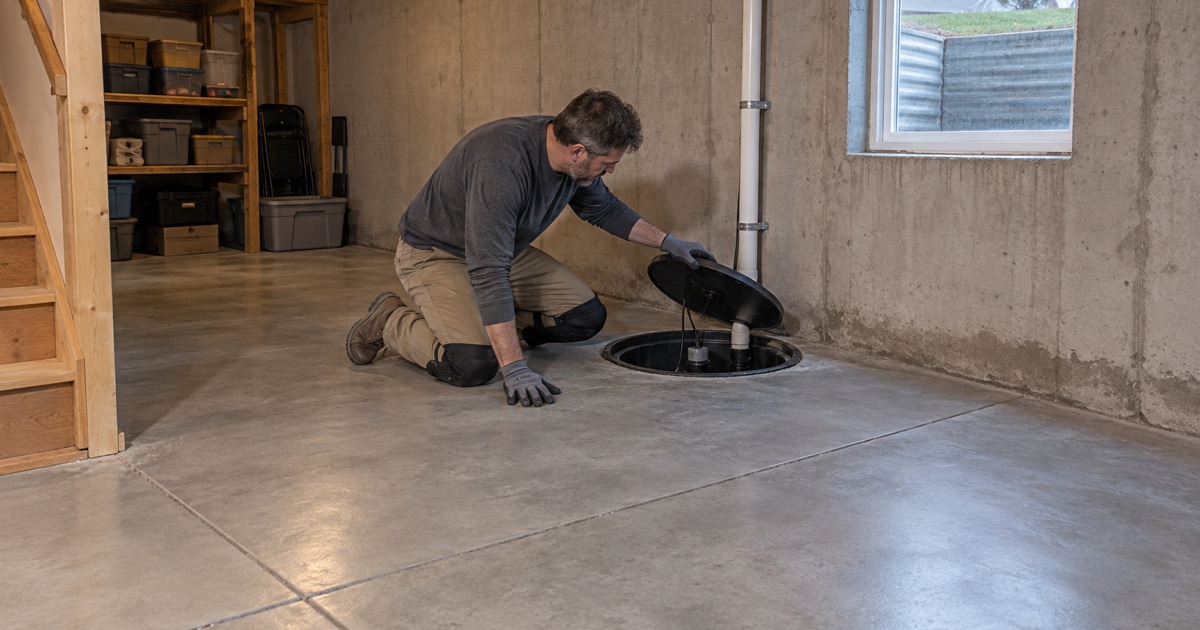
The lid lifted off an interior sump pit in the bare basement slab of a Marion house, the drain tile and slab read before any coating is chosen.

Basement Floor Coatings and Moisture

The first question on any basement floor is whether water or vapor comes up through the slab. We read the floor for past water, test it, and only then recommend a system, because a basement coating that traps moisture underneath will lift no matter how well it was applied.

Sump Pits, Drain Tile and Floor Drains

Marion Code section 126-37 has floor-base and perimeter drains run to an interior sump, so most basements here have a pit and drain tile in play. We check the pit and floor drain before coating and finish the floor to them cleanly, never sealing over a drain or a pit lid.

Old Paint, Patching and Tile Glue

Older basement floors often carry layers of paint, patching compound and black tile mastic. We grind those off rather than coating over them, since a new floor is only as well bonded as the weakest layer underneath it, and some old mastics need careful handling.

Basements Near Indian Creek

Nearly all of Marion drains to the Indian Creek watershed, and the June 2002 flood pushed water well beyond the 500-year level. A coated floor makes cleanup easier after water gets in, but it does not keep water out, and we will not describe it any other way.

Efflorescence on a Basement Floor

A white, powdery crust on a basement floor is efflorescence, salt carried to the surface by moisture moving through the concrete. It tells us water is traveling through the slab, so we test before coating and plan the primer around it rather than grinding it off and hoping.

Moisture-Mitigation Primers

When testing shows vapor emission above what a standard epoxy tolerates, a moisture-mitigation primer goes down first to hold that vapor back. It adds cost, so we only specify it when ASTM F1869 or ASTM F2170 readings show it is needed.

Coating After Water Gets In

If a basement has taken on water, the floor has to be cleaned, dried and retested before it is coated. We will not seal a wet slab to meet a schedule, because trapped moisture is the most common reason basement coatings fail.

Laundry Rooms, Workshops and Home Gyms

A coated basement floor suits laundry rooms that see spills, workshops that see dropped tools and home gyms that see heavy weights. We adjust texture and thickness to each use, adding grip near the washer and a thicker build under racks and equipment.

What a Basement Floor Warranty Leaves Out

Most coating warranties exclude moisture vapor transmission and hydrostatic pressure from below the slab, which are the two things most likely to lift a basement floor. We explain those exclusions before you sign, so the warranty means what you think it means.

Floor Coatings Are Not Radon Mitigation

A coating can seal small cracks, but it is not radon mitigation. Radon work in Iowa is credentialed under Iowa Code chapter 136B, and Marion adopted the radon-resistant construction appendix for new homes, so we refer radon questions to credentialed professionals.

Color, Flake and Finish

A blue-gray flake field framed by a solid gray border band on a finished garage floor in a newer Marion home.

Vinyl Flake Floor Blends

A vinyl flake broadcast covers the base coat with colored chips, and both the blend and the chip size change the finished look. Larger chips read bold from across the garage, while smaller chips give a tighter pattern that hides dust and minor marks well.

Metallic Epoxy Installation

Metallic epoxy uses pigments that move as the coating is worked, producing a marbled, three-dimensional look. It needs a flat, well-prepared slab, a controlled room temperature and an installer who works it consistently, because every lap and roller mark shows in the finished floor.

Polished Concrete Grind Levels

Polished concrete is ground in stages, hardened with a lithium silicate densifier and then polished to the chosen sheen. How deep we grind decides whether you see cream, salt-and-pepper fines or larger exposed aggregate, so we agree on the look before the first pass.

Choosing Gloss, Satin or Matte

A high-gloss topcoat looks sharp on day one but shows dust, scuffs and tire marks quickly. Satin and matte topcoats hide everyday wear better, which is why many garage owners choose them for a floor that is actually used.

Quartz Broadcast Floors

A quartz aggregate broadcast puts color and texture down in one step, which is why it is common in kitchens, locker rooms and commercial wet areas. The grain size and topcoat decide how much grip the floor has, so we specify both rather than promising slip resistance as a slogan.

Solid Color Floor Coatings

A solid color coating suits shops and storage areas where a clean, easy-to-see floor matters more than pattern. Dropped bolts and leaks show up immediately on a plain gray or tan floor, which is often exactly what a working shop wants.

Sunlight and Ultraviolet Ambering

Standard epoxy yellows when it sits in sunlight, which matters in a garage with the door open or a room with south-facing windows. A polyaspartic or polyurea topcoat resists that ambering, so we use one wherever ultraviolet exposure is likely.

Saw-Cut Borders and Logos

Saw-cut lines, contrasting borders and logos can be set into a coated or polished floor for a showroom, gym or branded shop. We lay them out on the slab before any coating goes down, so they line up with walls, doors and control joints.

Shops, Plants and Commercial Floors

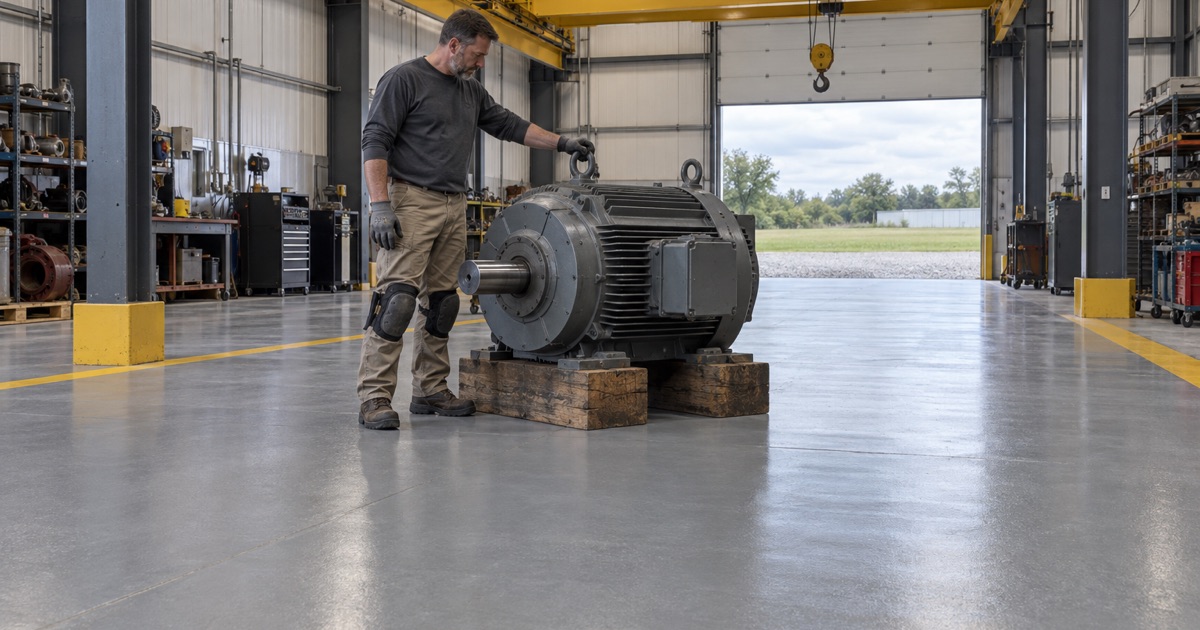
A large electric motor resting on timber cribbing on a new gray epoxy floor in a Marion motor repair shop under an overhead crane.

Commercial Versus Residential Floor Jobs

A commercial job adds schedules, safety rules and traffic a home never sees. We plan around shifts, specify the coating to the chemicals and loads on the floor, and coordinate with the owner or facility manager so the floor returns to service on a known date.

Machine Shop and Motor Shop Floors

Machine shops and motor shops in Marion work with oil, coolant, varnish and heavy dropped parts. We build those floors thicker, choose chemical-resistant topcoats and add texture where fluids collect, so the floor does not soften, stain or chip under daily work.

Food Plant Washdown Floors

Food plant floors are washed down every shift with hot water and cleaners. We specify systems that tolerate that cycle, slope-friendly finishes and coved bases at the walls, so water drains away rather than pooling at seams.

Urethane Cement Floor Systems

Urethane cement handles hot water, steam cleaning and thermal shock that would soften or crack a standard epoxy. It is the system we reach for in commercial kitchens, breweries and food plants where floor temperatures swing hard every day.

Warehouse and Distribution Floors

Forklifts and pallet jacks wear a path into an uncoated slab and break down joint edges. We repair joints, grind the floor and install a coating built for rolling loads, with striping and safety markings laid in where aisles and work zones need them.

Farm Shops and Equipment Dealer Bays

Farm shops and ag equipment dealer service bays see mud, hydraulic fluid, fertilizer residue and heavy tracked machinery. A thick, textured coating makes those floors easier to scrape and wash, and it keeps fluids from soaking into the concrete over a long season.

Restaurant Kitchen Floors and Coved Bases

Iowa’s adopted FDA Food Code, at 6-201.13, calls for coved floor and wall junctures in food areas. We install integral coved bases with the floor coating and plan kitchen work with Linn County Public Health’s plan review in mind, so inspection is not a surprise.

Uptown Marion Storefronts

The Uptown Marion Commercial Historic District holds older commercial buildings whose slabs have been patched, tiled and re-covered many times. We take those floors down to sound concrete, then match the finish to the shop, restaurant or office moving in.

Office, Clinic and Showroom Floors

Offices, clinics and showrooms need a floor that looks finished as well as one that lasts. Polished concrete, metallic epoxy and solid color systems all work here, and we choose based on foot traffic, cleaning routines and how much shine the space can carry.

Federal VOC Limits and Low-Odor Floors

Floor coatings sold nationally must meet the VOC limits in 40 CFR 59 Subpart D, and Iowa adds no stricter rule. We still recommend low-odor products for occupied buildings, because a business with people inside cares about smell even when a product is fully compliant.

Night and Weekend Commercial Installs

Many businesses cannot close for a week while a floor cures. We phase work by area, run overnight and weekend shifts and use fast-curing systems, so a shop line, kitchen or retail floor is back in use as quickly as the coating chemistry allows.

Areas We Serve

Marion Epoxy Flooring provides epoxy-flooring throughout the greater Marion area, with the same crews and the same standards on every job.

Good to know

Frequently Asked Questions

How long does an epoxy garage floor take from start to finish?

Most two-car garage floors take one to three working days, depending on how much crack and spall repair the slab needs and which coating system is chosen. Polyaspartic topcoats shorten the schedule, while a 100% solids epoxy base needs longer between coats. We give you the walk-on and drive-on times in writing before the job starts.

Do you test the concrete for moisture before quoting?

Yes. A moisture test is part of the written scope before the price is final, whether the floor is in a basement or a garage. Depending on the slab we use the ASTM D4263 plastic sheet test as a first screen, ASTM F1869 calcium chloride kits, or ASTM F2170 in-situ relative humidity probes, and the result decides whether a moisture-mitigation primer belongs in the system.

Why do you grind the floor instead of acid etching it?

Acid etching leaves a shallow, uneven profile and can leave residue the coating has to bond through. Diamond grinding or shot blasting opens the surface to a measured ICRI concrete surface profile and removes weak paste, sealers and old coatings, which gives the primer something real to grip.

Is polyaspartic really four times stronger than epoxy?

That claim compares one property under one test, and it is usually written by someone selling polyaspartic. Polyaspartic topcoats cure fast and resist ultraviolet ambering well, while a 100% solids epoxy base builds thickness at lower cost. Many of our garage floors use both, and the proposal says which product sits in which layer.

Can you coat a basement floor that has had water on it?

Sometimes, but only after we know where the water came from and the slab has dried. A coating does not stop seepage or hydrostatic pressure, so a floor with active water needs the drainage fixed first. Where vapor readings run high but the floor stays dry, a moisture-mitigation primer can make a coating practical.

Does the cold weather in Marion affect when you can install?

Yes. Coatings cure by chemistry that slows sharply as the slab gets colder, and the slab surface has to stay several degrees above the dew point to avoid amine blush and poor adhesion. Heated garages and basements can be done year round; an unheated garage in January is usually told to wait for warmer weather.

What does your coating warranty leave out?

We explain the exclusions before the job is sold rather than after a problem. Moisture vapor transmission and hydrostatic pressure from below the slab are the first ones we name, followed by new cracking in the concrete itself and damage from impact or chemicals the system was not specified for.

Do you need a contractor registration to work in Iowa?

Iowa requires contractors to register with the state under Iowa Code chapter 91C, and the city of Marion asks for that registration on its permit forms. Marion does not issue a separate city contractor license. If you are hiring anyone for floor work, asking for their state registration is a reasonable first question.

Are your coatings safe to apply in an attached garage or basement?

Floor coatings sold in the United States must meet the federal VOC limits in 40 CFR 59 Subpart D, and Iowa does not add a stricter rule of its own. We still offer low-odor products for attached garages and basements, because they make the days around the install more comfortable and let a household return to the space sooner.

Can you work on a commercial floor without shutting the business down?

Usually, yes. Shop, plant, warehouse and restaurant floors are phased around shifts, and we schedule overnight and weekend windows when a line or a kitchen cannot stop. Fast-curing systems such as polyaspartic and urethane cement help a floor return to service on a tight timeline.

Ready to Get Started?

Request a free quote today and we'll get back to you fast.