Marion Epoxy Flooring installs metallic epoxy floor systems in Marion, IA, serving surrounding cities including Hiawatha, Cedar Rapids, Mount Vernon, Stone City and Anamosa. Our 20+ years of preparing and coating concrete matter more on a metallic floor than almost anywhere else, because the decorative coat shows every dip in the slab, every lap mark and every temperature swing during the cure.
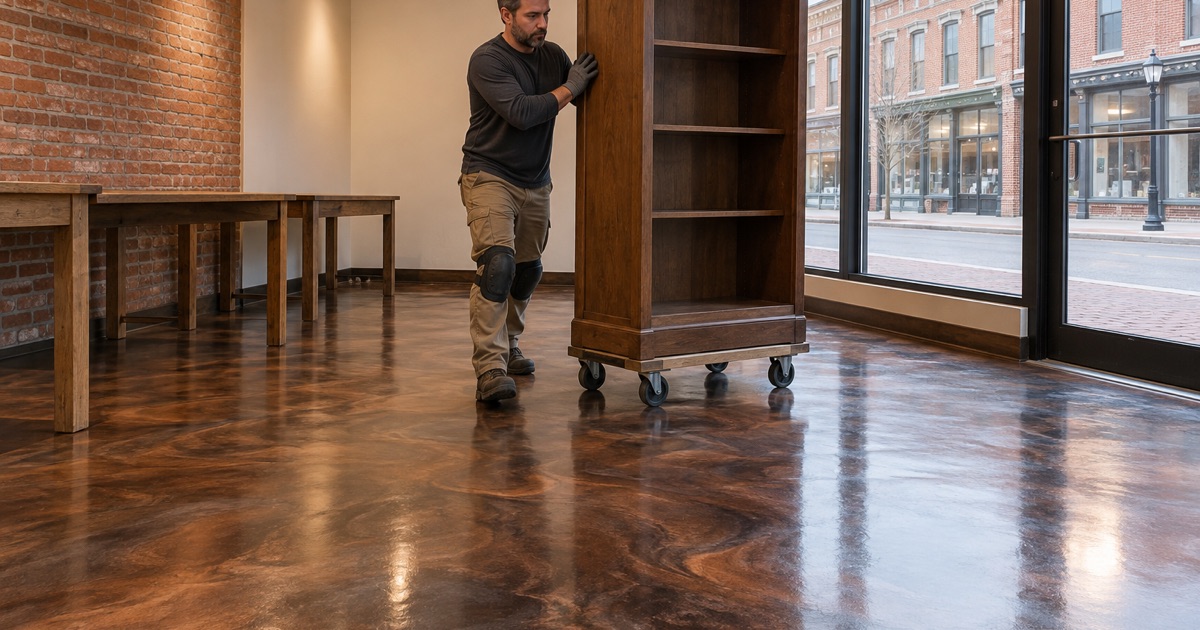
Metallic epoxy uses pearlescent pigments suspended in a clear epoxy. As the coating is poured and worked, the pigments move and settle, creating swirls, depth and a marbled, almost liquid look that no flake or solid color floor can match. It is a favorite for showrooms, offices, salons, basements finished as living space and homeowners who want a garage that looks like a gallery.
It is also the least forgiving coating we install. A good metallic floor depends on a flat, sound slab, a controlled room, an installer who works the material consistently and a protective topcoat that keeps the design from wearing away. This page explains each of those and how we handle them.
What Makes a Metallic Floor Work
A Flat, Ground Slab
Metallic epoxy flows and finds the low spots in a floor, so a slab that looks fine under carpet can show every dip once the pigment settles into it. We check flatness at the estimate, grind down high spots and ridges, and fill low areas before the decorative coat.
Every slab is opened with a diamond grinder or shot blaster, never an acid etch. That profile is what the primer locks into, and a metallic floor that delaminates takes its whole design with it.
Moisture Tested Before Anything Is Poured
A decorative floor is a bigger investment than a plain coating, and moisture coming up through the slab will ruin it just as surely. We test the concrete with a plastic sheet test, a calcium chloride kit or relative humidity probes and write the result into the scope before pricing.
Where readings run high, a moisture-mitigation primer goes into the system. Where there is active water, we say the floor is not ready for a decorative coating yet.
A Controlled Room
The decorative coat needs a stable temperature, still air and a slab that stays comfortably above the dew point while it cures. Drafts, direct sun through a window or a heater cycling on and off can change how the pigments move and leave visible patterns nobody planned.
We plan heat, ventilation and access before the pour and ask that doors stay closed while the coat levels. In unheated spaces, we schedule for weather that keeps the slab warm enough to cure properly.
Primer and Tinted Base Coat
After grinding and repairs, a penetrating primer seals the concrete so it does not outgas air bubbles into the decorative layer. A tinted base coat follows, usually in a color chosen to sit underneath the metallic and deepen it.
That base also hides patches, joint fills and color variation in the slab. Skipping it lets the concrete show through thin areas of the metallic coat, which reads as blotches once the floor is lit.
Designing the Look
Choosing Colors and Sample Boards
Metallic pigments range from silver, pewter and charcoal to copper, bronze, deep blue and pearl white. Two or three colors can be combined in one floor for depth or contrast.
We make sample boards with your chosen colors so you can see them in your own lighting. Photos online rarely show how a color will read under warm basement lights or bright showroom LEDs.
Techniques That Shape the Pattern
How the material is poured, rolled, troweled and manipulated decides the finished pattern. A slow, wide trowel motion creates broad, flowing veins; a tighter pattern produces a marbled look closer to natural stone; a solvent mist can open cells and lunar effects.
We agree the technique and an overall direction with you before the pour. No metallic floor can be copied exactly, but a clear plan keeps it from drifting into something you did not choose.
Borders, Logos and Saw-Cut Lines
Saw-cut lines, borders in a contrasting color and logos can be built into a metallic floor for a showroom, salon or office lobby. We lay these out against walls, doorways and control joints so the design works with the room.
Logos are usually set in after the base layers and before the topcoat, which locks them into the floor rather than leaving a sticker on the surface.
Protecting the Design
Ultraviolet-Stable Topcoats
Epoxy ambers when sunlight hits it, and the yellowing is most obvious on light metallic colors such as silver and pearl. We finish metallic floors with an aliphatic polyaspartic or urethane topcoat that resists ultraviolet light and keeps the colors true.
The topcoat also takes the wear, so the decorative layer underneath stays untouched by grit, chair legs and foot traffic.
Scratches and Everyday Wear
A smooth, glossy metallic floor shows scratches and fine swirls more readily than a busy flake floor. Felt pads on furniture, walk-off mats at entries and regular dust mopping keep the finish looking new much longer.
When the topcoat eventually shows wear in traffic lanes, it can be abraded and recoated without disturbing the design underneath, which is far easier than replacing the floor.
Traction in Wet Areas
A smooth metallic floor is slicker when wet than a broadcast floor. In bathrooms, entry areas and anywhere spills are expected, we add a fine texture to the topcoat to improve grip.
That texture slightly softens the clarity of the design, so we discuss the tradeoff and decide area by area rather than texturing the whole floor by default.
Where Metallic Epoxy Fits
Showrooms, Offices and Salons
In commercial spaces, a metallic floor gives an immediate impression without the seams of tile or the upkeep of wood. Showrooms, salons, offices and restaurants use it to set a tone the moment someone walks in.
We schedule commercial metallic installs around business hours where possible and isolate the work area, because the decorative coat must cure undisturbed.
Finished Basements
A metallic floor can turn a basement into a family room or bar area with a finish that cleans easily and does not hold dampness like carpet. Because basements sit below grade, the moisture test is not optional here.
We also check the sump pit and floor drains, and we coat around them cleanly so the drainage system stays easy to service.
Garages, With Honest Expectations
Some homeowners want a metallic garage floor, and it can look striking. Hot tires, road salt and gravel are hard on a smooth decorative surface, so we pair it with a tough polyaspartic topcoat and explain the extra care it will need through an Iowa winter.
If the garage takes daily vehicle traffic and heavy snowmelt, a flake system is usually the more practical choice, and we will say so.
What Moves the Price
Metallic floors cost more than flake or solid color systems because they take more material, more coats and more skilled labor on the pour. Slab condition is the other big variable: a floor that needs heavy grinding, crack repair or leveling before the decorative coat adds time.
Room size, the number of colors, any logos or saw-cut borders and the choice of topcoat round out the estimate. Your proposal lists each product, the coat count and the finished thickness, so you can see exactly where the money goes.
- 20+ Years on Concrete
- Moisture Tested Before Pricing
- Free Written Estimates